On this page
- 01 Quick answer: best month and time of day in 2026
- 02 How Borobudur’s seasons really work
- 03 Month-by-month: choosing your own “best time”
- 04 Crowds and access in 2026: what actually matters
- 05 Best time of day: sunrise, morning, or afternoon?
- 06 From Yogyakarta or Bali: matching routes to your timing
- 07 Rainy season workarounds: how to enjoy Borobudur from November–March
- 08 How long to stay at Borobudur?
- 09 Practical planning: what we arrange, what you should verify
- 10 FAQs: Best time to visit Borobudur (2026)
The best time to visit Borobudur is the dry season from May to September, when mornings are clearer and rain is less likely. If you prefer thinner crowds, April and October are usually the most balanced months.
As someone who lives in Yogyakarta and has been walking Borobudur’s stone corridors for more than ten years, I’ll be honest: there is no single “perfect” month. There is a best month to visit Borobudur for clear skies, another for quiet terraces, another if you want to experience Waisak/Vesak, and another if you want lower hotel prices and do not mind some rain.
This guide breaks that decision down carefully for 2026 — by season, by month, and even by day of the week and time of day — so you can match your expectations with Central Java’s weather and Borobudur’s new, capped-access system.
—
Quick answer: best month and time of day in 2026
If you just want a straight recommendation, here it is.
- Best overall month: June or early July (weekdays)
Dry, relatively clear sunrises, and still manageable crowds if you avoid Indonesian school holidays and long weekends.
- Best for fewer people: second half of April or early October
Shoulder season. A mix of dry and wet days, thinner crowds, and better room availability.
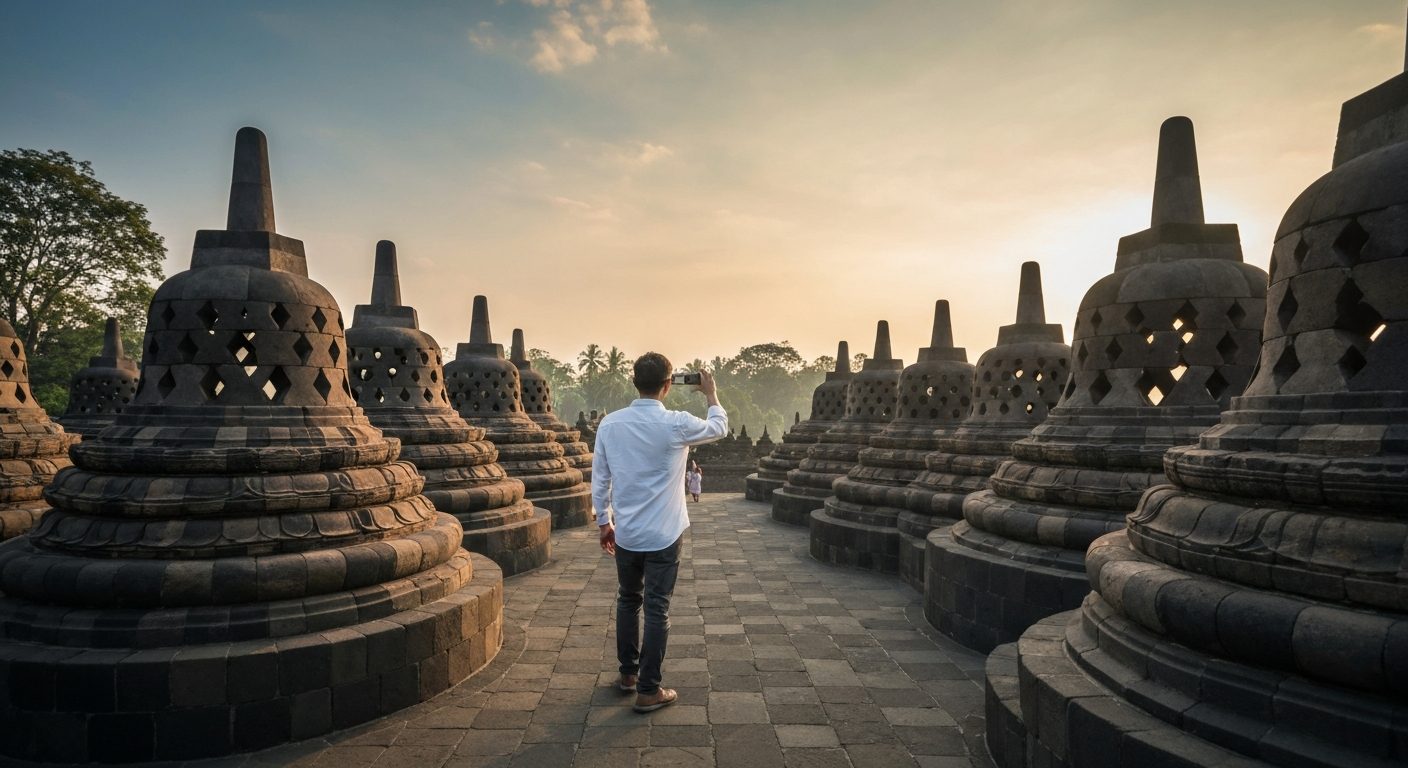
- Best for sunrise photos: any clear morning from May–September, ideally Tuesday–Thursday, first time slot of the day.
- Best for budget travellers: late January–March, outside Chinese New Year and local long weekends. More risk of rain, but also more flexibility and lower average hotel rates.
To turn that into a real plan, we need to unpack the climate, crowd patterns, and new access rules.
—
How Borobudur’s seasons really work
Central Java has two main seasons rather than four.
Borobudur dry season: May–September
Locally, this is considered borobudur dry season best weather months.
- Rainfall: lower; short showers still possible but usually brief.
- Humidity: still high by European or North American standards, but slightly less heavy than in January–March.
- Temperature: around the high 20s to low 30s °C in the day; comfortably cooler before 8 am and after 4 pm.
- Sunrise visibility: this is when your odds are best. Not guaranteed, but improved.
Because of that, borobudur dry season tours May to September are popular. Expect more visitors, especially:
- Indonesian school holidays (usually late June to mid-July).
- Idul Fitri / Lebaran period (dates shift every year with the lunar calendar).
- Weekends and long weekends.
Shoulder months: April and October
These two months are my personal favourites.
- Weather: a transition. April is usually moving out of rainy season; October is the early start of the rains but often still mostly dry.
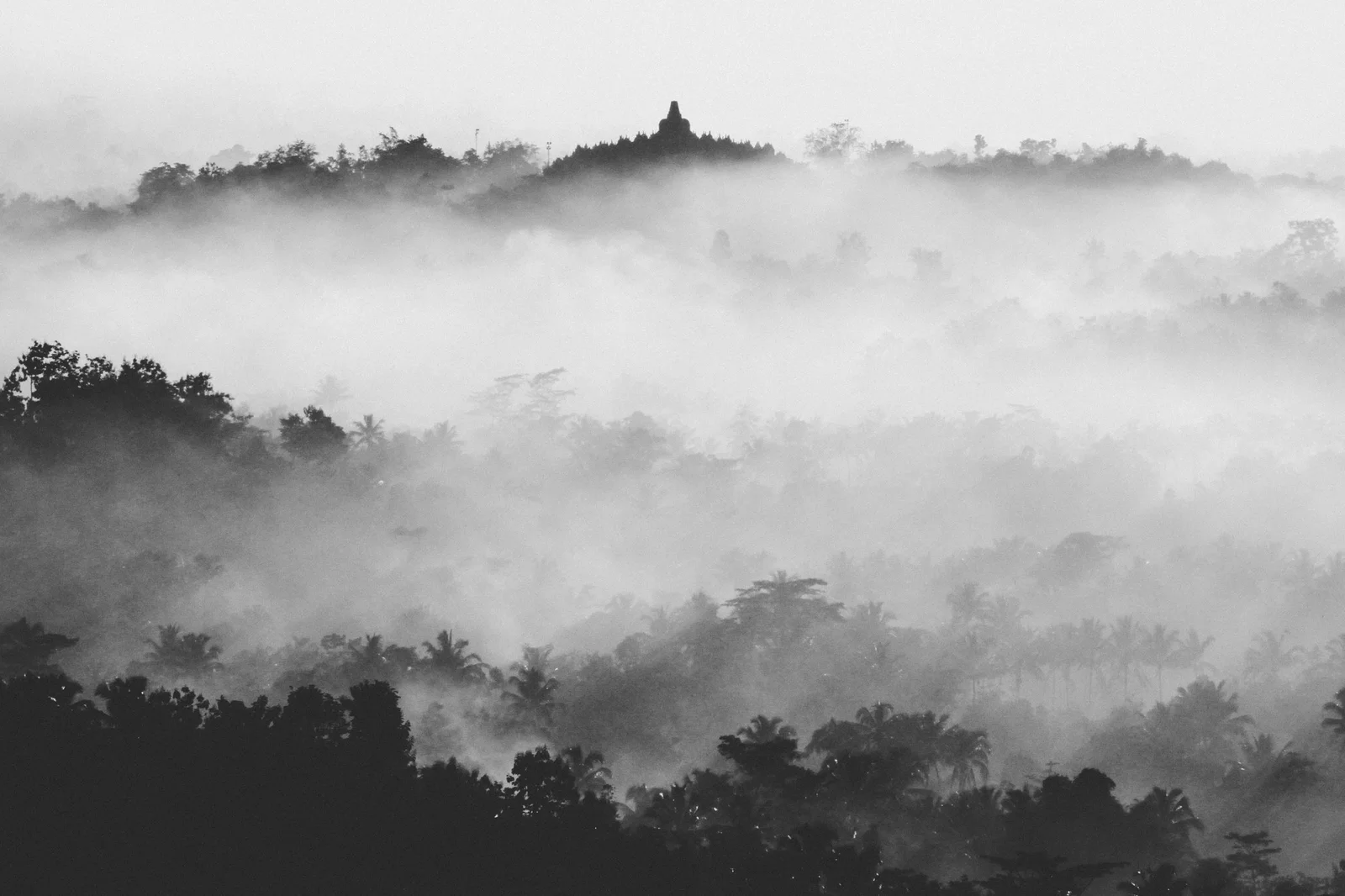
- Cloud cover: early morning can be misty, which many people love in photos.
- Crowds: lighter than June–August, especially on weekdays.
- Prices: hotel and transport rates can be a bit softer than deep dry season.
If you are trying to decide when to visit Borobudur best season for comfort plus crowd levels, April and October deserve a close look.
Rainy season: November–March
This is where borobudur rainy season tips matter.
- Rainfall: higher, usually in afternoon or evening showers, but some days can be wet from morning.
- Humidity: high; it can feel heavier and warmer, especially around midday.
- Visibility: more clouds and haze; sunrises can be dramatic, but also often hidden.
- Crowds: generally fewer international visitors except around Christmas–New Year and Chinese New Year.
The upside: softer prices, more last-minute availability, and a calmer feel at the temple itself.
The downside: you need a flexible attitude and a good poncho.
—

Month-by-month: choosing your own “best time”
Below is a high-level overview for 2026 planning. Always check actual event dates and school calendars again nearer your trip.
| Month | Weather feel | Crowds | Who it suits |
|---|---|---|---|
| January | Wet, humid; many cloudy mornings | Moderate around New Year, then quieter | Flexible travellers, value-focused trips |
| February | Still rainy; some heavy showers | Busier if near Chinese New Year | Repeat visitors, photographers seeking moody skies |
| March | Gradual easing of rain | Generally calm | Those who dislike crowds more than rain |
| April | Transition; mix of wet & dry | Light–moderate | Balanced choice for first-timers |
| May | Start of reliable dry season | Building up | Sunrise-focused, early planners |
| June | Dry, comfortable mornings | High, esp. around holidays | Families, classic “summer trip” planners |
| July | Dry, mild mornings | High (local school holidays) | Those tied to school schedules |
| August | Still dry; stable | High but slightly less than July | First-timers wanting safer weather odds |
| September | Late dry season; some haze | Moderate | Couples, friends looking for a quieter dry month |
| October | Hot; early rains, mixed days | Moderate–low | Those avoiding peak crowds |
| November | Rains building | Low | Budget-conscious travellers |
| December | Wet and warm | Higher around Christmas–New Year | Holiday-makers with fixed dates |
—
Crowds and access in 2026: what actually matters
Weather is only half the story. Borobudur peak season crowd management 2026 is shaped by three main things:
- New capped-ticket climb system (post-2022).
- Calendar events (Waisak/Vesak, public holidays, school holidays).
- Weekday vs weekend patterns.
The capped climb system (post-2022 rules)
Indonesian authorities and UNESCO agreed on a limited number of visitors allowed to climb the temple per day to reduce wear on the stones. The exact quota and ticket structure can adjust over time, but the key points are:
- There is a difference between a “temple park” ticket (grounds and museum only) and a “climb ticket” (limited, timed access up to the terraces).
- Climb tickets are date- and time-specific, and numbers are capped.
- You must wear soft sandals supplied by the park to help protect the stone.
Because capacities are limited, some days sell out of climb slots, especially in June–August, during domestic school holidays, and on long weekends.
For this reason, if you already know your approximate dates, it is wise to plan your trip early with our Bali Premium Trip reservations team. They work directly with the official ticketing system and licensed local guides to match your preferred day and time slot, and can discuss backups if your first choice is unavailable.
Waisak/Vesak at Borobudur
Waisak (Vesak) is the most important Buddhist holiday in Indonesia and is usually celebrated in May (exact date follows the Buddhist lunar calendar; confirm again for 2026 before locking in flights).
What to know:
- The temple becomes a focus for pilgrimage and ceremonies, with processions from Mendut and Pawon temples.
- On and around the main Waisak day, access to the upper terraces may be restricted for general visitors during certain hours.
- Crowds are larger, but the atmosphere is deeply special.
If your priority is pure photography and quiet relief reading, avoid Waisak itself. If you are curious about Buddhist ritual and do not mind crowds, Waisak can be a meaningful time to visit — just build in extra days and accept that some time slots may be off-limits.
Indonesian school holidays and public holidays
These change slightly year to year, but some patterns are consistent:
- Idul Fitri (Lebaran): the end of Ramadan. A major travel period; roads and attractions are busy.
- June–July: Indonesian school holidays, often late June to mid-July.
- National public holidays and long weekends: traffic and visitor numbers spike.
On these dates, Borobudur can feel noticeably busier. Climb slots are more competitive, parking areas clog up by mid-morning, and queues for the shuttle buses inside the park can be longer.
If your schedule is flexible, avoid:
- Saturdays and Sundays in June–August.
- Idul Fitri week and the following weekend.
- Waisak day and possibly one day either side.
Weekdays vs weekends: which day is “best”?
For 2026, if everything else is equal:
- Best days: Tuesday, Wednesday, Thursday
- Decent compromise: Monday, Friday
- Busiest: Saturday, Sunday, plus any day attached to a national holiday
Weekday sunrise slots are still popular, but movement on the platforms is more relaxed and your guide can usually find you pockets of relative quiet to sit and absorb the reliefs.
—
Best time of day: sunrise, morning, or afternoon?
Besides deciding the borobudur best time to visit weather, you also need to pick a time of day.
Sunrise entry
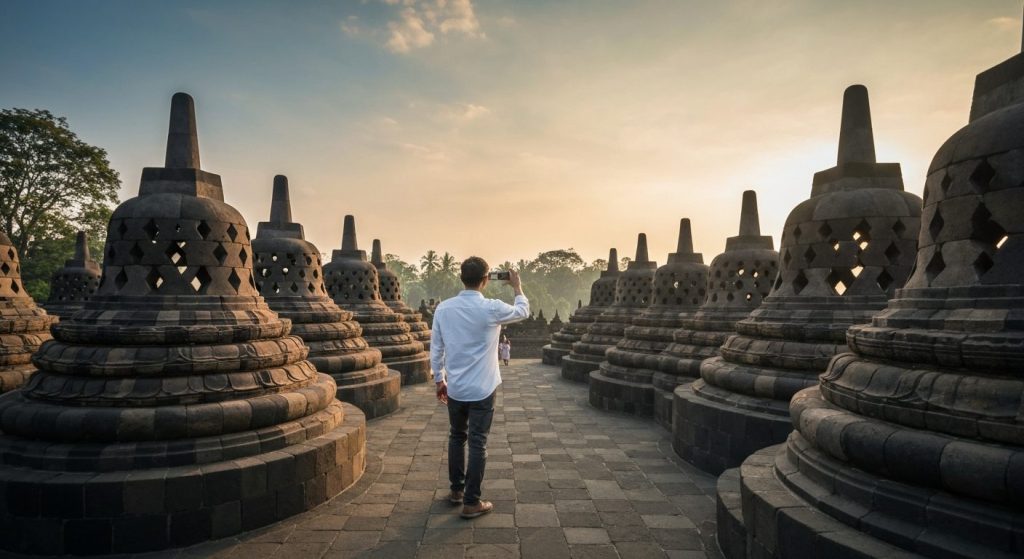
Borobudur’s classic image is sunrise over the Kedu Plain. Post-2022:
- Access and exact logistics for pre-dawn entry have changed several times, and may continue to evolve.
- In 2026, some forms of early access or first-morning slots are typically available, but details should be confirmed at booking.
Pros:
- Cooler air.
- Better odds of clear horizons in dry season.
- Softer light for photos and relief reading.
Cons:
- Very early departure from Yogyakarta (often around 3:00–3:30 am by car, depending on your hotel).
- Higher demand for early slots, especially May–September.
- If it is cloudy or hazy, the sunrise may be muted.
Regular morning entry (after sunrise)
From around 08:00–10:30:
- Light is stronger; photography can be harsher.
- Temperatures rise quickly, especially after 9 am.
- Tour-bus groups are usually inside by this time.
This slot suits:
- Families who do not want 3 am wake-ups.
- Visitors more interested in the stories on the relief panels than sunrise silhouettes.
Late afternoon
From roughly 15:00–17:00:
- Heat eases again, though humidity can remain high.
- Light becomes warmer; shadows deepen on the reliefs.
- Fewer groups; sunset itself is usually viewed from the grounds, not the upper terraces.
Afternoon can be an underrated choice, especially outside peak dry-season weekends.
—
From Yogyakarta or Bali: matching routes to your timing
Borobudur best time visit Yogyakarta
Yogyakarta is the most practical base for Borobudur. Distances are short enough that you can visit as a day trip, or stay a night near the temple if you want a slower rhythm.
- Distance Yogya–Borobudur: roughly 40 km, usually 1–1.5 hours by car depending on traffic and your hotel location.
- Typical private trip durations: half-day (around 6 hours door to door) or full-day (8–10 hours with extra stops).
For sunrise or first-morning climbs, staying the night before in Borobudur village is ideal. You avoid the 3 am road journey, and you also see the temple area when day-trippers have gone.
From Yogyakarta, the best time to visit Borobudur is linked to when you want to be on the temple:
- For sunrise / first slot, aim to arrive at the gate around 30–45 minutes before your booked time.
- For regular morning visits, consider 08:00–10:00 entry to avoid midday heat.
- For afternoon, target 15:00 entry, giving you time to wander before the park winds down.
Our Bali Premium Trip team can arrange private car and licensed guide from your hotel in Yogya, with typical private day trips sitting in the range of US$120–250 per person (last verified June 2026) depending on group size, transport class, and how many extra stops (Mendut, Pawon, local village visits) you add. These are indicative ranges, not fixed quotes.
If you’d like us to sketch options around your dates and energy levels, send a note or WhatsApp through plan your trip and we can respond with sample timings and route ideas.
Visiting Borobudur from Bali
Many people now ask: “Can I do Borobudur as a side trip from Bali?”
Yes, but think in days, not hours.
Your basic options:
- Fly Bali–Yogyakarta return and stay in Yogya
- Direct flight Denpasar (Bali) – Yogyakarta (YIA): around 1 hour 15 minutes.
- Airport to central Yogyakarta: about 1–1.5 hours depending on traffic.
- Then Yogya to Borobudur as above.
- Works well as a 2–3 day add-on before or after a Bali stay.
- Fly Bali–Yogyakarta and stay near Borobudur
- Arrive in Yogya, transfer directly to Borobudur (another 1.5–2 hours).
- Sleep near the temple; sunrise / early session next morning; continue to Prambanan or fly onward.
- This can fit in 2 days / 1 night, but 3 days is more relaxed.
Trying to do Borobudur from Bali in a single day is technically possible if flight times align, but it is a long, tiring chain of transfers and offers little margin for delays. For most visitors, two nights around Yogyakarta or Borobudur is a better match, especially in rainy season when flights and traffic can be disrupted.
Indicative combined packages (Bali–Yogya–Borobudur–Prambanan, 3 days / 2 nights, private car, local flights, licensed guides) often sit around US$450–900 per person (last verified June 2026), varying with hotel category, season, and how early flights are booked. Again, these are reference ranges, not fixed offers.
—
Rainy season workarounds: how to enjoy Borobudur from November–March
If your schedule locks you into the rainy months, you can still have a very good visit. A few borobudur rainy season tips from experience:
1. Keep your day flexible
Rain often comes in bursts, not all-day downpours.
- If you are staying near the temple, we can keep a soft plan: aim for early morning, but be ready to slide to mid-morning or afternoon if the radar and clouds suggest a better window.
- From Yogyakarta, you have less flexibility, but we can still adjust departure by an hour or two if conditions allow.
2. Bring serious rain gear, not just an umbrella
Umbrellas are awkward on narrow stairs and in wind.
- A lightweight poncho or rain jacket, plus a small dry bag for cameras and phones, makes a big difference.
- Wear quick-dry clothing and sandals; your feet will likely get wet regardless.
3. Focus on reliefs, not horizons
Rainy season can give you:
- Softer, diffused light on the relief panels.
- Fewer people on the upper terraces, especially in light rain.
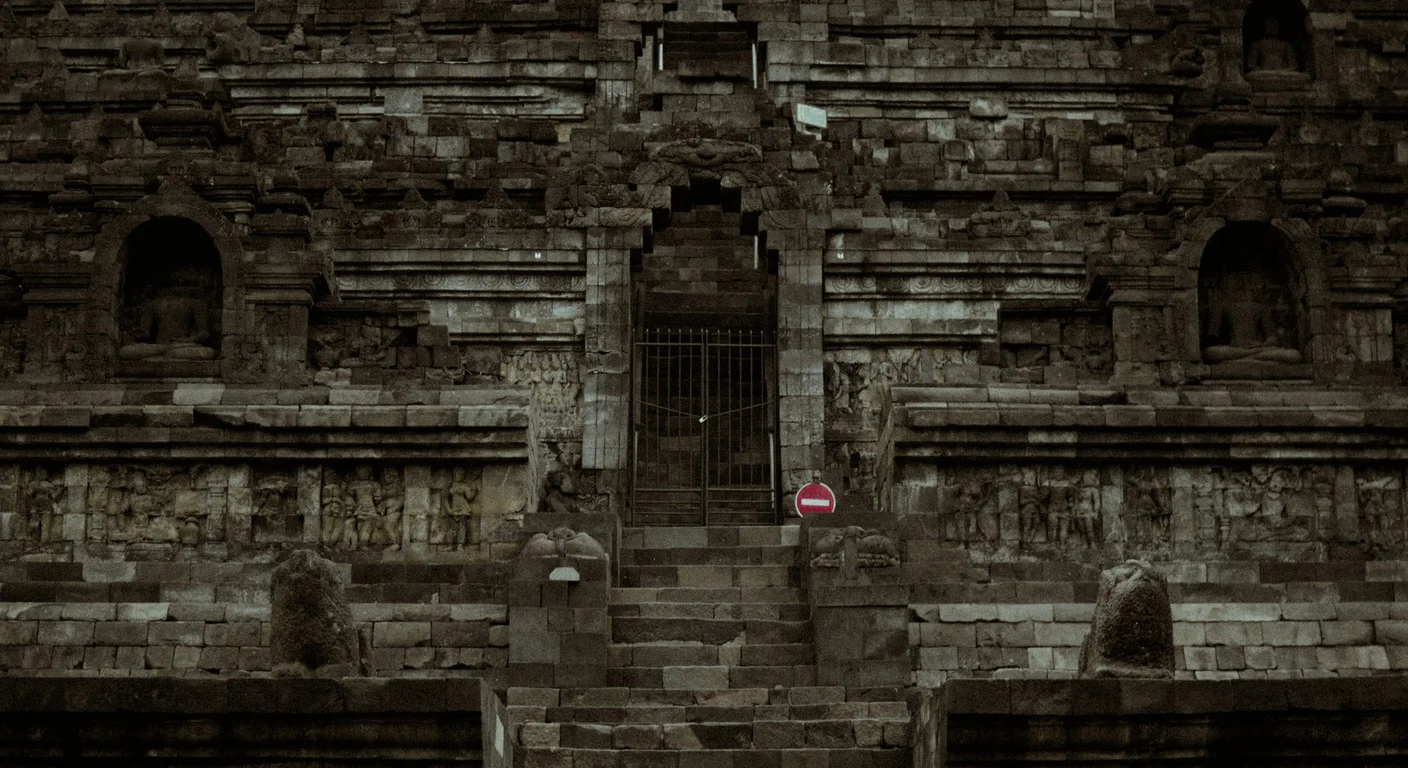
Your guide can slow down the climb, letting you spend more time with the narrative reliefs — Buddha’s life stories, Jataka tales, and the karmic panels many visitors rush past in dry season.
4. Accept that sunrise is a bonus, not a promise
In rainy months, frame sunrise as a pleasant surprise, not a guarantee. Your best photo of the trip might instead be mist hanging in the coconut palms, or a quiet corner of the third gallery where you have the Buddha statues almost to yourself.
—
How long to stay at Borobudur?
For a first visit under the current ticketing and conservation rules, these are realistic durations:
- Temple climb + park + museum: 2–3 hours inside the complex.
- Adding Mendut and Pawon temples nearby: another 1.5–2 hours with transfers.
- Adding a village walk or cycling around the rice fields: extend to a full day from Yogya (8–10 hours total door to door).
There is no need to rush. The capped visitor numbers and guided routes mean your time on the upper terraces is structured; the art is dense and rewards slow looking.
—
Practical planning: what we arrange, what you should verify
Borobudur’s rules and prices have changed several times since 2020, and they may change again.
Some elements you should always verify close to your travel date:
- Exact climb ticket quotas and time slots.
- Any temporary closure or access change (for conservation, ceremonies, or major maintenance).
- Early-morning / sunrise access protocols.
- Updated park regulations, such as dress code and what you can bring onto the terraces.
As Borobudur Package, operated by Bali Premium Trip, we:
- Book directly with the official ticketing channels and licensed local guides.
- Lay out costs clearly and in advance, with no third-party mark-ups.
- Arrange third-party services such as park shuttle jeeps, local village activities, and permits through vetted local partners.
If you would like help matching your dates to seasons, crowd levels, and the new access system, you can always plan your trip with us over email or WhatsApp. Tell us your rough month, number of nights, and how early you are willing to wake up, and we can suggest specific days and time windows that fit.
—
FAQs: Best time to visit Borobudur (2026)
Which month is the best month to visit Borobudur?
For most first-time visitors, June and early July (avoiding Indonesian school-holiday weekends) are a solid choice for drier mornings and clearer skies. If you prefer fewer people and are comfortable with a mix of sun and showers, late April and early October are often the best balance between weather and crowds.
Is rainy season a bad time to visit Borobudur?
Not necessarily. From November to March you will face more rain and humidity, and sunrise is less predictable, but crowds are thinner and prices can be lower. If you are flexible on time of day, bring good rain gear, and focus on the reliefs rather than guaranteed views, rainy season can still be rewarding.
What is the best day of the week to visit Borobudur?
Tuesdays, Wednesdays, and Thursdays are usually best for lower crowd levels, especially outside major holidays and the June–July school break. Saturdays, Sundays, and long weekends are the busiest; if that is when you must travel, consider the earliest time slot available and allow extra time for queues and traffic.
Can I do a Borobudur sunrise trip from Bali in one day?
It is technically possible but not recommended. You would need early flights, several transfers, and would have almost no buffer for delays. Most travellers are happier with a 2–3 day add-on: flying Bali–Yogyakarta, staying near Yogya or Borobudur, and visiting the temple at a calmer pace.
How far in advance should I book Borobudur climb tickets?
In dry season (May–September), especially around June–July and holidays, it is wise to secure your preferred day and time slot several weeks in advance if you can. Outside peak periods a shorter lead time is often fine, but because quotas are capped, it is still safer to confirm once your travel dates are fixed. Our Bali Premium Trip reservations team can check current availability and options when you plan your trip by email or WhatsApp.