Borobudur Temple Tour Guided UNESCO Heritage Experience
On this page
- 01 What is a Borobudur Temple Tour? Beyond the Postcard View
- 02 Understanding Borobudur: A UNESCO World Heritage Site
- 03 Planning Your Borobudur Tour: Key Decisions
- 04 The Real Cost of a Borobudur Temple Tour (Last Verified June 2026)
- 05 Access Rules, Dress Code, and Climbing Borobudur
- 06 The Borobudur Pilgrimage Path: Reading the Reliefs with an Expert Guide
- 07 Beyond the Temple: Candirejo Village and Local Life
- 08 Booking Your Expert-Guided Borobudur Temple Tour with Bali Premium Trip
- 09 Why Choose a Private, Expert-Guided Borobudur Tour?
- 10 Practical Tips for Your Visit
- Frequently Asked Questions
As someone who’s watched the sun rise over Borobudur more times than I can count – and spent countless afternoons tracing the stories on its walls – I understand the questions first-time visitors have. A Borobudur temple tour isn’t just a quick photo stop; it’s a journey into history, faith, and intricate artistry. This page aims to be your candid guide, sharing what I’ve learned over a decade of documenting and guiding visits to this extraordinary UNESCO World Heritage Site in Central Java.
Borobudur stands as the world’s largest Buddhist temple, a colossal stupa and monument to enlightenment. It’s a place that demands a slow pace, a quiet mind, and, ideally, an expert voice to unlock its layers of meaning. Here, we’ll cover the real costs, the best times to visit, how to navigate its access rules, and how Bali Premium Trip can arrange a private, expert-guided experience that goes beyond the typical tourist rush.
What is a Borobudur Temple Tour? Beyond the Postcard View
A true Borobudur temple tour invites you to engage deeply with one of humanity’s most profound architectural and spiritual achievements. Built in the 9th century, this colossal Buddhist monument is more than just an ancient ruin; it’s a physical representation of the path to nirvana. Its design is a mandala, a cosmic diagram, guiding pilgrims upward through levels of Buddhist cosmology.
Most visitors arrive with an image of Borobudur’s iconic bell-shaped stupas against a dawn sky, but the real experience is found in the walk. The traditional pilgrimage involves circumambulating each of the nine platforms, always moving clockwise (known as pradakshina). This path spans over 2.5 kilometers of intricate narrative relief carvings and hundreds of Buddha statues. Without context, these carvings are simply beautiful stone art. With a knowledgeable guide, they become a living scripture, telling tales of karma, the life of Buddha, and the quest for spiritual awakening.
Understanding the Pradakshina Path and its Stories
The nine platforms of Borobudur are divided into three main sections, representing the three realms of Buddhist cosmology:
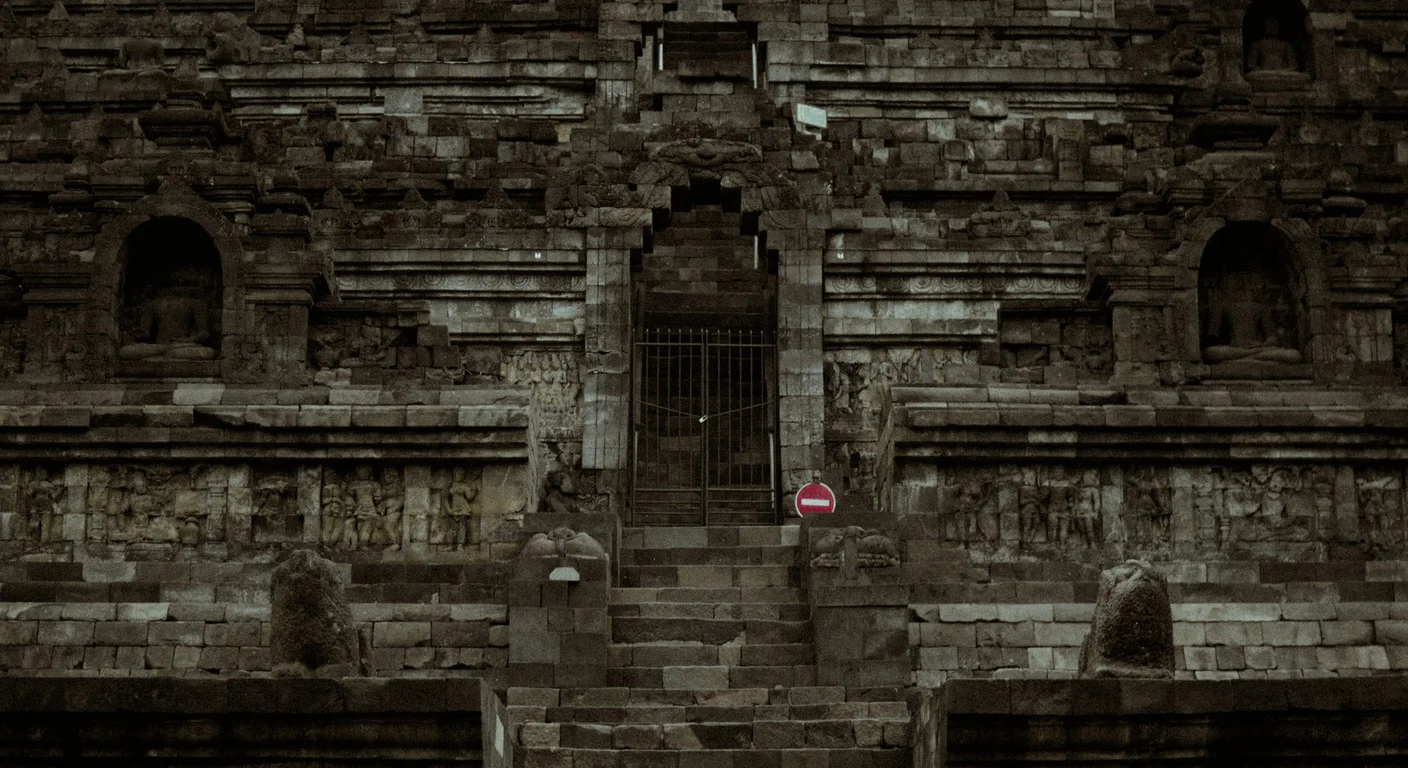
- Kamadhatu (The World of Desire): The base, hidden by an outer encasement, illustrates the law of karma, showing cause and effect. Some panels are visible on the south side.
- Rupadhatu (The World of Forms): The five square terraces above, featuring 1,300 narrative relief panels depicting the life of Buddha (Lalitavistara) and his previous incarnations (Jataka and Avadana), alongside stories of the quest for wisdom (Gandavyuha). Here, the Buddha figures are seated in niches, each with a specific mudra (hand gesture) corresponding to a cardinal direction.
- Arupadhatu (The World of Formlessness): The three circular terraces at the top, devoid of narrative reliefs, feature 72 openwork stupas, each encasing a statue of Buddha. This realm represents detachment from worldly forms, leading to the ultimate central stupa.
Walking this path with an expert guide allows you to “read” these stories, connecting the intricate details to the larger Buddhist philosophy. This is the heart of a meaningful Borobudur heritage temple tour guide Central Java experience.
Understanding Borobudur: A UNESCO World Heritage Site
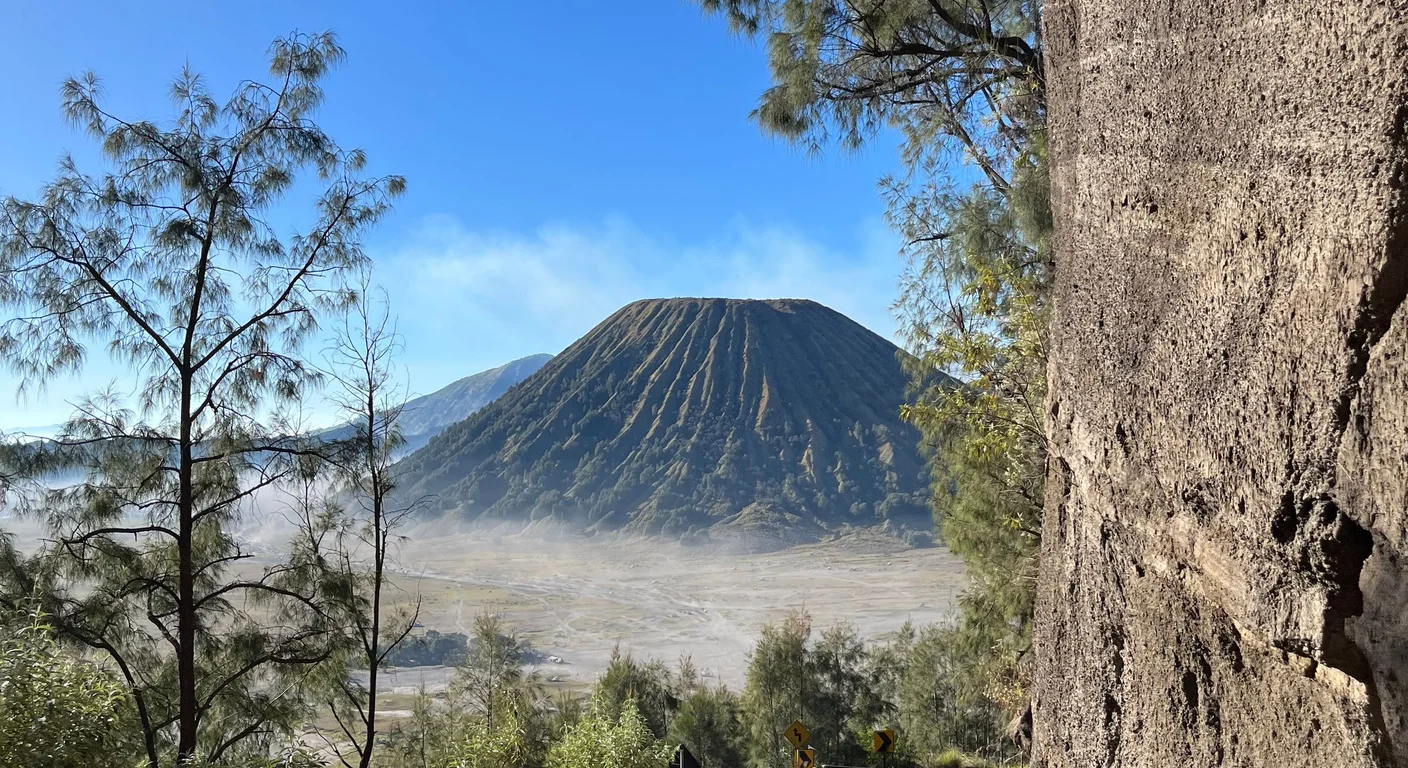
Borobudur’s journey through time is as compelling as its architecture. Built by the Sailendra Dynasty, it was completed around 825 AD. For centuries, it served as a significant center for Buddhist pilgrimage and learning. However, with the decline of Buddhist kingdoms in Java and the rise of Islam, Borobudur was gradually abandoned, eventually becoming consumed by jungle and volcanic ash from Mount Merapi.
It lay hidden for nearly a thousand years until its rediscovery by British Lieutenant Governor Sir Thomas Stamford Raffles in 1814. He ordered its clearing and documentation, beginning the long process of restoration. The most significant restoration effort was undertaken by UNESCO and the Indonesian government between 1973 and 1983, a monumental undertaking that involved dismantling and rebuilding the entire structure, stone by stone. This effort cemented its status as a Borobudur UNESCO tour destination, preserving it for future generations.
The Borobudur Site: A Broader Cultural Landscape
The temple is located in the Kedu Valley, near the city of Magelang, Central Java. Its location is strategic, surrounded by volcanoes (Merapi, Merbabu, Sumbing, Sindoro) and two rivers (Progo and Elo). This fertile volcanic plain was historically significant, supporting early kingdoms and agricultural prosperity. The Borobudur Magelang tour often includes views of this surrounding landscape, offering context to the temple’s enduring presence.
Planning Your Borobudur Tour: Key Decisions
Your experience at Borobudur will largely depend on how you choose to visit. I’ve seen countless ways people approach it, from hurried stops to multi-day immersive trips. Here’s what you should consider:
Sunrise vs. Day Visit: Timing Your Experience
- Sunrise Visit (Early Morning)
-
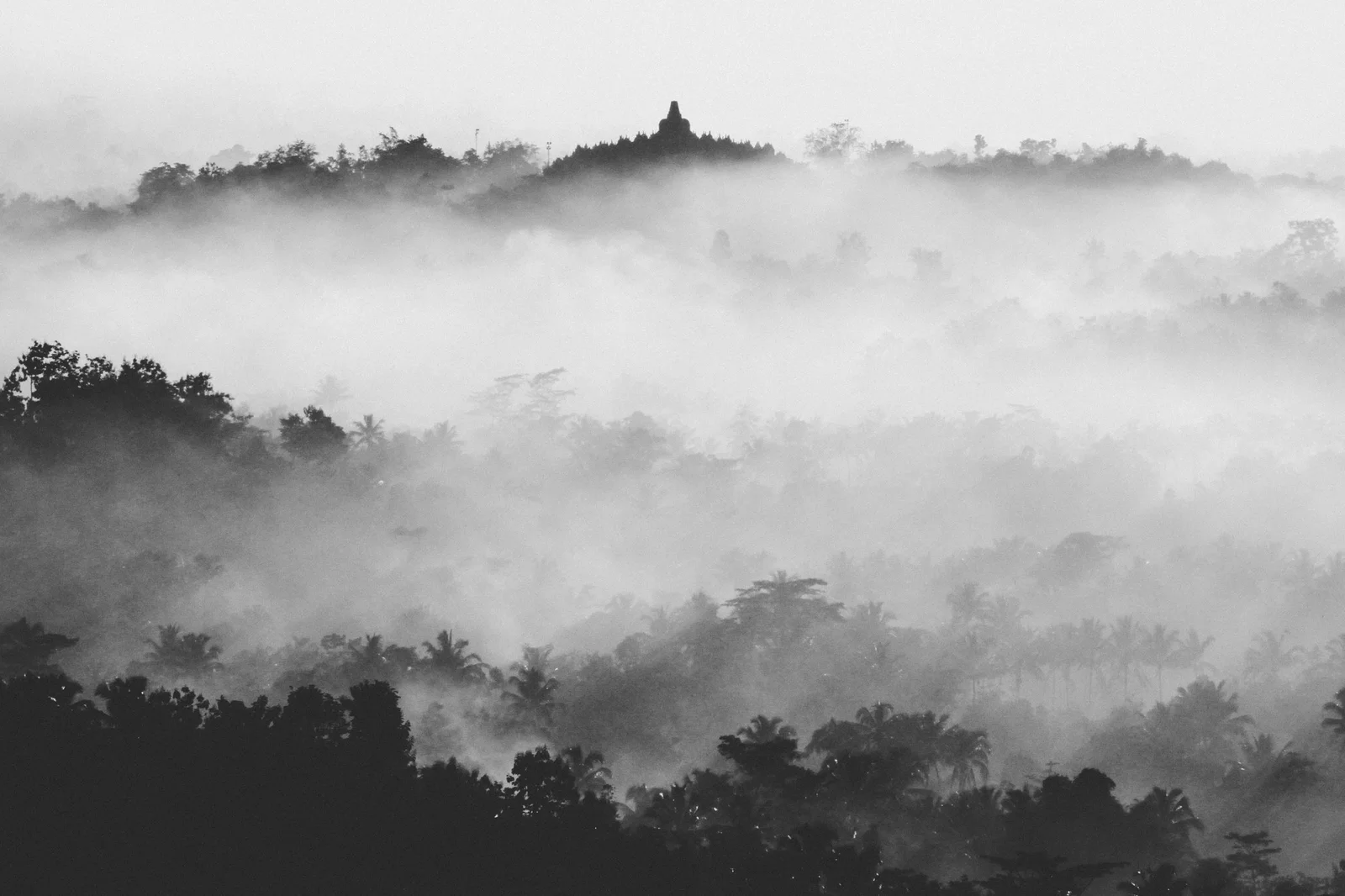
Experience: Often considered the most magical time. You arrive in darkness, ascend the temple (or view from designated spots), and witness the sun slowly illuminate the stupas and the surrounding landscape, often shrouded in mist. The air is cool, and the atmosphere can be very serene before the crowds fully arrive.
Logistics: Requires a very early start, typically leaving Yogyakarta around 3:00-3:30 AM. There’s a specific, higher-priced ticket for sunrise access, which historically allowed temple climbing before general opening hours. *Please note: Access rules for climbing the monument itself, especially for sunrise, have changed frequently. As of my last check (June 2026), direct monument climbing at dawn may be restricted or require a separate, limited quota ticket, and often involves viewing sunrise from ground level or nearby hills like Punthuk Setumbu.*
Crowds: Can still be crowded, especially during peak season, as many opt for this experience. However, the sheer size of the monument and the early hour can help spread people out.
- Day Visit (Regular Hours)
-
Experience: Offers a more relaxed pace. You have ample time to explore the grounds, museum, and walk around the temple. The light during mid-morning and late afternoon is excellent for photography, and a good guide can still make it incredibly engaging.
Logistics: General admission tickets are less expensive. The temple complex opens to visitors at 6:30 AM and closes at 4:30 PM (last entry 3:30 PM). This allows for a more comfortable morning without the extreme early start.
Crowds: Mid-day (10 AM – 2 PM) can be very busy, especially with tour buses. If you visit mid-morning or mid-afternoon, it can be more manageable.
My honest take? While sunrise is iconic, a well-planned mid-morning or late afternoon visit with an expert guide can be just as, if not more, rewarding. The quality of your interpretation often matters more than the exact time of day for truly understanding Borobudur’s stories.
Guided vs. Self-Guided: Maximizing Your Understanding
Borobudur is vast and complex. Walking it without a guide is like reading a book in a language you don’t understand; you can appreciate the beauty of the script, but you miss the story. A Borobudur guided tour English speaking or a Borobudur temple reliefs tour expert guide transforms your visit from sightseeing to profound learning.
- Self-Guided: You’re free to roam, but you’ll likely miss the intricate narratives of the 2,672 relief panels, the significance of the mudras, and the overarching Buddhist philosophy. You’ll see, but you won’t fully comprehend.
- Expert-Guided: A licensed guide will lead you along the pradakshina path, explaining the Karmawibhangga, Lalitavistara, and Gandavyuha stories carved into the walls. They’ll point out details you’d otherwise overlook, offer historical context, and connect the ancient teachings to modern life. This is especially true for our private Borobudur temple tour with licensed guide, designed for a deep dive.
Getting There: Routes from Yogyakarta or Bali
Most visitors to Borobudur base themselves in Yogyakarta (often shortened to Jogja), which is the closest major city with an international airport (YIA) and excellent infrastructure. However, many also journey from Bali, making it a multi-island adventure.
From Yogyakarta (Central Java)
Yogyakarta is approximately 40 kilometers southeast of Borobudur. The journey usually takes 1 to 1.5 hours by car, depending on traffic. This is the most common and convenient starting point for a Borobudur Central Java tour.
- Private Car with Driver: The most comfortable and flexible option. A private car can pick you up from your hotel in Yogyakarta at your desired time, wait for you at Borobudur, and take you to other sites like Prambanan or local villages before returning. This is what Bali Premium Trip arranges.
- Taxi/Ride-Hailing Apps: Available, but less reliable for return journeys from Borobudur itself, especially if you’re staying for an extended period or visiting early morning.
- Public Bus: The cheapest option, but also the slowest and least convenient. You’d take a TransJogja bus to Jombor Terminal, then another local bus to Borobudur. Not recommended for early morning visits or those with limited time.
From Bali
Traveling from Bali to Borobudur involves a domestic flight to Yogyakarta. The distance from Bali to Yogyakarta is approximately 1,232 km. Direct flights from Denpasar (DPS) to Yogyakarta (YIA) take about 1 hour and 15 minutes. This makes a Borobudur temple central Java tours entirely feasible as a multi-day trip from Bali.
- Flight + Private Tour: This is the recommended approach for those coming from Bali. You’d fly into Yogyakarta, be met by a Bali Premium Trip representative and driver, and then proceed with your Borobudur tour and any other desired activities in Central Java. This often means an overnight stay in Yogyakarta or Magelang to properly experience Borobudur without rush.
- Connecting Flights: Some may choose to fly via Jakarta, but direct flights are generally more efficient.
The Real Cost of a Borobudur Temple Tour (Last Verified June 2026)
Understanding the costs involved in a Borobudur visit can be confusing due to varying ticket types, access rules, and tour inclusions. I’ll break down the components so you can plan effectively. All prices below are indicative ranges for non-Indonesian citizens, as local rates are significantly lower. Prices are subject to change by the park authority.
Entrance Fees and Access Levels
The Borobudur Temple complex has evolved its ticketing and access. Historically, you could climb to the top of the monument with a standard ticket. Now, access to the monument’s upper levels is often restricted or requires a separate, limited quota ticket, primarily to protect the structure. Most general admission tickets allow access to the temple grounds (the Borobudur Park area) and around the base of the monument, but not necessarily climbing to the upper terraces.
| Ticket Type / Access | Indicative Cost (USD, last verified June 2026) | Notes |
|---|---|---|
| General Admission (Adult) | US$25 – US$30 per person | Access to Borobudur Park grounds. Allows viewing the temple from the base/first platform. Does NOT usually include climbing to upper terraces/stupas. |
| General Admission (Child 3-10 years) | US$15 – US$20 per person | Same access as adult general admission. |
| Monument Climbing Ticket (Adult) | US$40 – US$50 per person (in addition to General Admission) | Required for access to the upper platforms and stupas. Limited quota, often booked in advance. May include a local temple guide and special footwear. Availability can be highly restricted. |
| Sunrise Ticket (Manohara or similar package) | US$45 – US$60 per person | Historically provided early access to climb the temple for sunrise. Now, it often means early access to the park grounds for sunrise viewing, with monument climbing still subject to separate rules/tickets. Includes a light breakfast. Check current rules carefully. |
| Combined Ticket (Borobudur & Prambanan) | US$45 – US$55 per person | Offers a slight discount if you plan to visit both major temples. Still subject to monument climbing rules. |
Important Note on Climbing: The park management has implemented stricter rules to preserve Borobudur. Direct ascent to the top (Arupadhatu) may require special, limited tickets and specific footwear. Many tours now focus on appreciating the temple from the Rupadhatu levels or from ground level, which still offers an incredibly rich experience, especially with a knowledgeable guide. Always check the very latest regulations before your visit. Bali Premium Trip will provide the most current information when arranging your tour.
Guide Fees
A licensed, English-speaking local guide for Borobudur is highly recommended. Their expertise is invaluable. Expect to pay:
- Licensed Local Guide: US$30 – US$50 for a 2-3 hour guided tour of Borobudur, depending on the guide’s experience and language. This is typically paid directly to the guide or included in your tour package.
Transportation Costs (Round Trip)
This is a significant component, especially if coming from Yogyakarta or requiring airport transfers.
- Private Car with Driver (from Yogyakarta): US$40 – US$70 for a half-day trip to Borobudur, including pick-up/drop-off and waiting time. This range can increase for full-day tours that include other sites like Prambanan or for early sunrise departures.
- Airport Transfer (Yogyakarta Airport to hotel): US$15 – US$25.
- Full-Day Private Tour (from Yogyakarta, including Borobudur & Prambanan): US$70 – US$120, depending on vehicle type, duration, and specific itinerary.
- Domestic Flight (Denpasar to Yogyakarta): US$50 – US$150 per person, round trip, depending on airline, booking time, and season.
Estimated Total Cost for a Private, Expert-Guided Borobudur Temple Tour (Last Verified June 2026)
For a truly deep, expert-led Borobudur guided tour English speaking experience, arranged by Bali Premium Trip, here are indicative ranges:
- From Yogyakarta (Half-Day, private car, guide, general admission): US$100 – US$180 per person (assuming 2 people sharing transport, higher for solo). This covers transport, guide, and standard park entrance. If the monument climbing ticket is desired and available, add another US$40-50 per person.
- From Bali (2-Day, including flights, 1 night in Yogyakarta, transfers, private car, guide, general admission): US$350 – US$600 per person (based on 2 people sharing accommodation/transport, excluding meals, higher for solo). This is a comprehensive package designed for a relaxed, in-depth visit.
These ranges are for services arranged directly by Bali Premium Trip. We work with vetted, licensed on-ground Central Java guides and reliable transport partners to ensure a seamless experience. When you book directly with our Bali Premium Trip reservations team, you receive transparent, published rates with no third-party markup. We arrange all guides, permits, and transfers for you.
Access Rules, Dress Code, and Climbing Borobudur
To ensure a respectful and smooth visit, be aware of these practicalities:
Dress Code
Borobudur is a sacred site. While there isn’t a strict enforcement for covering hair, modesty is expected. You should dress respectfully, covering your shoulders and knees. Many visitors choose to wear a sarong, which is often provided or available for rent at the entrance if your clothing is deemed too revealing. I always recommend wearing light, breathable clothing suitable for walking and the tropical climate, but ensure it covers enough to be respectful.
Temple Opening Hours (General Admission)
- Daily: 6:30 AM to 4:30 PM (last entry at 3:30 PM).
- Sunrise Access: Requires a special ticket, typically starting earlier (e.g., 4:30 AM).
Climbing Borobudur: Current Regulations
As mentioned, access to the very top (Arupadhatu levels with the circular stupas) has become highly regulated. The goal is conservation. When you book with Bali Premium Trip, we will provide the most up-to-date information regarding monument climbing tickets, availability, and specific requirements (like mandatory special sandals or accompanying local guides for climbing groups). Regardless of upper-level access, the lower and middle Rupadhatu levels, with their extensive relief carvings, offer a rich and fulfilling Borobudur walking tour guided pilgrimage path.
General Rules
- Footwear: Comfortable walking shoes are essential. If monument climbing is allowed and requires special footwear, it will be provided.
- No Drones: Drones are generally not permitted without special permits.
- No Smoking/Vaping: The entire complex is a no-smoking zone.
- Stay on Designated Paths: This helps protect the structure and ensures your safety.
- Be Mindful of Others: Especially during busy times, be patient and respectful of other visitors and their experience.
The Borobudur Pilgrimage Path: Reading the Reliefs with an Expert Guide
The true magic of Borobudur unfolds as you walk its levels, guided by the narrative relief carvings. There are 2,672 individual panels, stretching for kilometers if laid end-to-end. They are not merely decorations; they are a visual sermon, a Buddhist scripture in stone. This is why a Borobudur temple reliefs tour expert guide is invaluable.
Karmawibhangga: The Law of Cause and Effect
At the base of the temple, largely hidden by an encasement, the Karmawibhangga series depicts scenes of human actions and their consequences, illustrating the Buddhist law of karma. While most of these are covered, a few panels on the south side have been left exposed, offering a glimpse into this foundational teaching. An expert guide can explain the moral lessons depicted here, setting the stage for the upward journey.
Lalitavistara: The Life of Buddha
As you ascend to the first gallery of the Rupadhatu, you encounter the Lalitavistara series, which tells the story of Siddhartha Gautama’s life, from his birth as Prince Siddhartha to his first sermon. These panels are incredibly detailed, showing key moments like his miraculous birth, his renunciation of worldly life, his enlightenment under the Bodhi tree, and his early teachings. A guide brings these ancient stories to life, helping you connect with the human journey of the Buddha.
Gandavyuha: The Quest for Enlightenment
Higher up, the Gandavyuha reliefs narrate the epic quest of Sudhana, a young seeker who journeys through various teachers and bodhisattvas in his search for ultimate wisdom. This series is extensive and complex, symbolizing the arduous and multifaceted path to enlightenment. It’s a powerful visual metaphor for spiritual striving, and a guide can help you follow Sudhana’s transformative journey.
Without an expert guide, these panels are simply beautiful carvings. With one, they become a profound narrative, turning your visit into a true Borobudur walking tour guided pilgrimage path. Our licensed guides are fluent in English and deeply knowledgeable about Buddhist philosophy, Javanese history, and the intricate details of Borobudur’s art.
Beyond the Temple: Candirejo Village and Local Life
A truly authentic Borobudur cultural significance Buddhist relief carvings tour doesn’t end at the temple gate. To understand Borobudur fully, it helps to see it within its living context. Just a short distance from the monument lies Candirejo Village, a traditional Javanese village that offers a glimpse into local life and culture. This is often integrated into a comprehensive Borobudur Candirejo village authentic tour.
Here, you can experience:
- Traditional Crafts: See how local artisans create traditional crafts like batik, pottery, and bamboo weaving.
- Javanese Cuisine: Taste local delicacies and learn about traditional cooking methods.
- Rural Life: Observe daily life, farming practices, and the rhythm of a community that has lived in the shadow of Borobudur for centuries.
- Andong (Horse Cart) Rides: A charming way to explore the village and its surroundings.
Connecting with Candirejo Village adds another layer of authenticity to your visit, showcasing how the cultural heritage around Borobudur continues to thrive. It’s a wonderful contrast to the ancient grandeur of the temple, offering a look at the enduring spirit of Central Java.
Booking Your Expert-Guided Borobudur Temple Tour with Bali Premium Trip
At Bali Premium Trip, we believe in crafting experiences that are rich, personal, and authentic. Our Borobudur temple tour offerings are designed to provide a deep, expert-led UNESCO heritage experience of the world’s largest Buddhist temple at Magelang, Central Java. We focus on a slow, narrated walk along the pradakshina pilgrimage path with an English-speaking heritage guide, ensuring you connect with the temple’s profound meaning rather than just rushing through.
We operate as a Bali-based concierge, founded in 2015, specializing in premium travel experiences across Indonesia. When you arrange a trip with us, you are booking directly with our Bali Premium Trip reservations team. We work with vetted, licensed local guides in Central Java and trusted transport partners to ensure your trip is seamless and insightful. We arrange guides, permits, and transfers but do not own the park concessions – we simply ensure you get the best access and interpretation possible.
How to Plan and Book Your Tour
Planning your private, expert-guided Borobudur experience is straightforward:
- Contact Us: Reach out via WhatsApp or email.
- Discuss Your Preferences: Let us know your travel dates, group size, preferred pace (sunrise or day visit), and any specific interests (e.g., combining with Prambanan, Candirejo Village).
- Receive a Tailored Itinerary & Quote: Our team will craft a personalized itinerary and provide transparent, published rates with no third-party markup.
- Confirm Your Booking: Once you’re happy with the plan, confirm your booking directly with us.
Our goal is to remove the logistical complexities, leaving you free to immerse yourself in Borobudur’s ancient beauty. We are committed to providing a reliable, honest service, ensuring your Borobudur temple tour with licensed guide is everything you hope for.
Ready to experience Borobudur with depth and understanding? Plan your trip with us today. You can also reach our team directly via WhatsApp at +6281128590000 or email [email protected].
Why Choose a Private, Expert-Guided Borobudur Tour?
In a world of fast-paced travel, slowing down at a site like Borobudur makes all the difference. A private, expert-guided tour offers distinct advantages over generic group tours:
- Personalized Pace: You set the rhythm. Spend more time at panels that intrigue you, or move efficiently if needed. No waiting for a large group.
- In-Depth Interpretation: Your guide can tailor explanations to your interests and questions, diving deep into Buddhist philosophy, history, or specific relief carvings. This is crucial for understanding the Borobudur cultural significance buddhist relief carvings.
- Flexibility: Want to add a stop at a local coffee plantation, visit Prambanan, or explore Candirejo Village? Your itinerary can be adjusted.
- Comfort & Convenience: Private transfers mean direct pick-up and drop-off from your accommodation, in a comfortable, air-conditioned vehicle.
- Avoid the Crowds (Strategically): Your guide knows the best times and routes to navigate the temple grounds, helping you find quieter moments even during busy periods.
It’s an investment in a richer, more meaningful travel experience, especially for a site as significant as Borobudur.
Practical Tips for Your Visit
Having visited Borobudur countless times, here are a few practical tips I always share:
- Hydrate: Central Java is hot and humid. Bring plenty of water.
- Sun Protection: A hat, sunglasses, and reef-safe sunscreen are essential, especially if visiting during the day.
- Comfortable Footwear: You’ll be doing a lot of walking and climbing stairs.
- Small Backpack: Carry essentials like water, camera, and sun protection.
- Power Bank: For your phone and camera.
- Cash: For small purchases, snacks, or souvenirs outside the main complex.
- Respect Local Customs: Be mindful of your actions, especially at a sacred site.
- Visit the Museums: The Borobudur Museum and Karmawibhangga Museum within the complex offer additional context and artifacts, well worth an hour of your time after the temple visit.
Best Time to Visit Borobudur
Generally, the dry season (April to October) offers the best weather with less rain and clearer skies, ideal for photography. Within the day, early morning (just after sunrise or around 7 AM) or late afternoon (after 2 PM) tend to be cooler and potentially less crowded than midday.
Frequently Asked Questions
What is the best way to get from Yogyakarta to Borobudur?
The most convenient and efficient way is by private car with a driver. Bali Premium Trip arranges comfortable, air-conditioned private transfers directly from your hotel in Yogyakarta to Borobudur, including waiting time and any additional stops you wish to make.
Is it worth getting a guide for Borobudur?
Absolutely. Borobudur’s hundreds of relief carvings tell complex Buddhist stories and historical narratives that are almost impossible to interpret without expert guidance. A licensed, English-speaking guide transforms your visit from merely seeing a structure to understanding a profound spiritual journey.
Can you still climb to the top of Borobudur Temple?
Access to the very top (Arupadhatu levels) is subject to strict regulations and often requires a separate, limited quota ticket in addition to general admission. These rules are in place to preserve the monument. When arranging your Borobudur temple tour with
Ready to experience Borobudur without the usual planning headaches?
We’re here to help. Our team at Bali Premium Trip is dedicated to creating a memorable and meaningful journey for you.