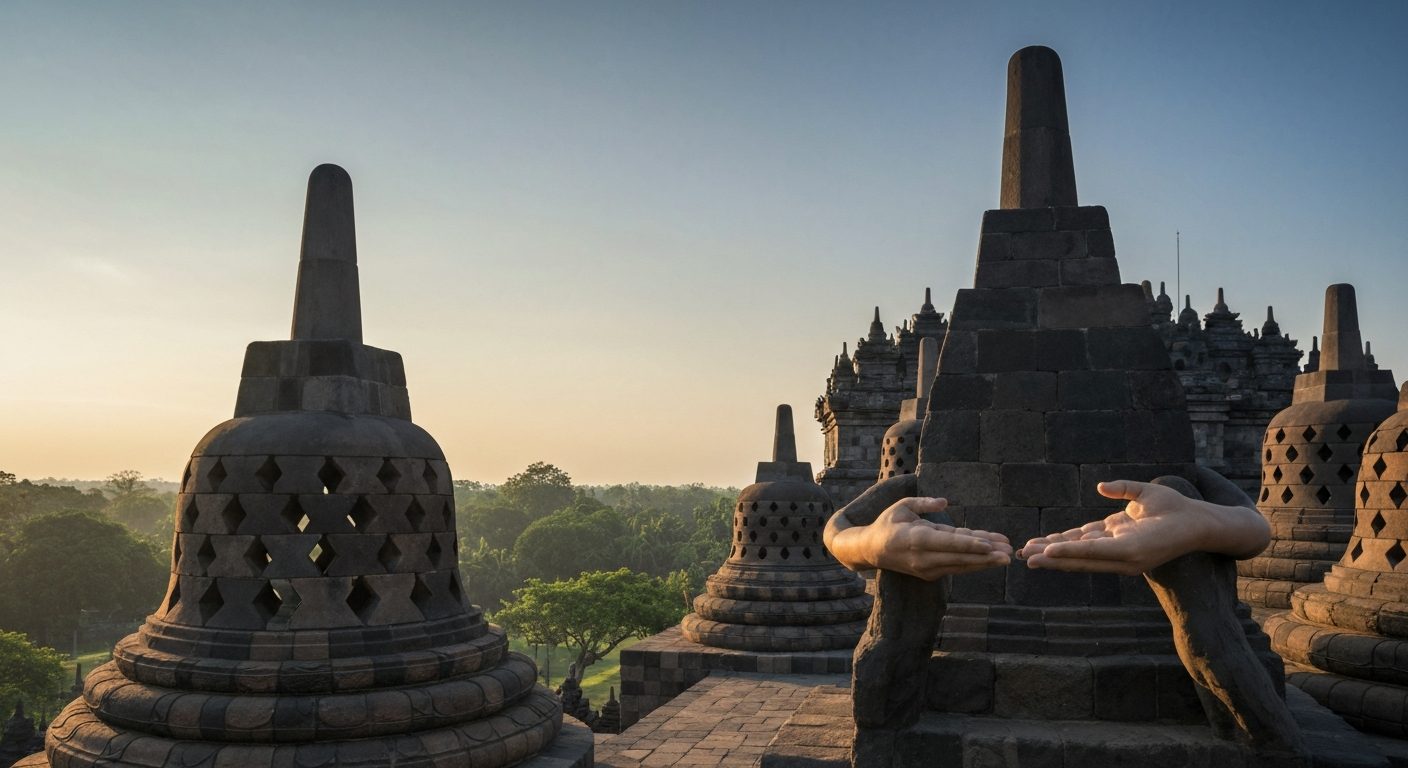
Borobudur is more than just a magnificent temple; it’s the anchor of an enriching journey through Central Java. When planning your Indonesian adventure, understanding all the things to do Yogyakarta Borobudur, and in the surrounding region, transforms a single temple visit into a multi-day cultural experience. As Dewi Larasati, a heritage-travel writer based right here in Yogyakarta, I’ve spent over a decade guiding and documenting visits to Borobudur and Prambanan. I’ve watched countless sunrises paint the stupas gold and found quiet moments reading the ancient reliefs in the afternoon. Let me share the practical realities and the genuine magic of this incredible place.
Borobudur: A Glimpse into the Past
This colossal 9th-century Mahayana Buddhist temple stands in Magelang, Central Java, Indonesia. It’s not merely a structure; it’s a profound spiritual journey carved in stone. Borobudur comprises nine stacked platforms – six square and three circular – culminating in a central dome. It became a UNESCO World Heritage site in 1991, recognized for its immense cultural significance and architectural genius.
As you walk its pathways, you’ll encounter 2,672 relief panels depicting Buddhist cosmology and daily life, alongside 504 Buddha statues. The most iconic sight might be the 72 Buddha statues, each seated within a perforated stupa, surrounding the main central dome. It’s a place of quiet contemplation and impressive scale.
Understanding Borobudur Access: Tickets, Rules, and What to Expect
Visiting Borobudur involves a few considerations regarding tickets and access. It’s vital to know the current rules before you arrive, as these can change.
Ticket Options (Indicative, last verified June 2026):
- Foreigner Regular Entry
- US$25-30 per person (ages 11+). Grants access to the temple grounds and lower terraces. Upper stupa access is generally restricted with this ticket.
- Foreigner Child Entry
- US$15-20 per person (ages 3-10). Similar access restrictions to the regular ticket.
- Borobudur Sunrise Ticket (Manohara Hotel)
- US$40-50 per person. Purchased at the Manohara Hotel, located within the temple complex. This ticket often includes early entry before sunrise, a torch, and coffee/tea. Historically, this ticket has granted access to the upper terraces for sunrise, though specific rules can vary and are subject to change by park management. Always confirm current access details when booking.
- Combined Borobudur & Prambanan Ticket
- US$40-45 per person. A popular option if you plan to visit both major temples. It can offer a slight saving compared to buying individual tickets. Access rules for Borobudur (upper terraces) still apply based on the specific type of combined ticket or entry time.
Current Access Rules (as of mid-2023 and subject to change):
On a standard ticket, climbing the very top stupas of Borobudur is generally not permitted. Access is limited to the lower terraces, allowing you to walk around the base and appreciate the reliefs and statues from below. Special tickets, like the sunrise option from Manohara Hotel or specific cultural packages, may offer limited access to the upper terraces or specific viewing platforms. These rules are put in place to preserve the ancient structure. It’s always best to verify the latest regulations when you finalize your travel plans.
Dress Code:
Modest clothing is required. This means covering your knees and shoulders. Sarongs are often provided at the entrance, or you can bring your own. It’s a sign of respect for this sacred site.
Getting to Borobudur: Routes from Yogyakarta or Bali
Borobudur is located in Magelang, Central Java. While it’s not directly in Yogyakarta, the city serves as the primary gateway for most visitors.
From Yogyakarta:
Borobudur is approximately 40 kilometers (25 miles) northwest of Yogyakarta city. The drive typically takes around 1.5 hours, depending on traffic.
- Private Car with Driver: This is the most convenient and recommended option for comfort and flexibility. A full day (8-10 hours) private car with driver, including fuel, typically costs US$50-70 (indicative, last verified June 2026). This allows you to visit Borobudur, perhaps Candirejo village, or even Prambanan on the same day.
- Scooter Rental: For independent travelers, renting a scooter is an option, costing around US$5-10 per day. However, traffic can be busy, and navigation might be challenging for first-timers.
- Public Bus: While the most budget-friendly, public buses are often slower and less direct, requiring transfers. They depart from Jombor Bus Terminal in Yogyakarta.
From Bali (Denpasar Ngurah Rai Airport – DPS):
If you’re starting your journey in Bali, you’ll need to fly to Yogyakarta.
- Flight: A direct flight from Denpasar (DPS) to Yogyakarta International Airport (YIA) takes approximately 1 hour. Several airlines operate this route daily.
- Yogyakarta Airport to City: Once you land at YIA, the airport is located a bit outside the city. An airport transfer to Yogyakarta city center costs around US$20-30 (indicative, last verified June 2026) and takes about 1-1.5 hours. From the city, you then follow the directions above to Borobudur.
Given the distances and the desire to maximize your time, arranging a private transfer through a reliable operator like our Bali Premium Trip reservations team is often the best choice for a smooth, stress-free experience.
Beyond the Temple: Things to Do Near Borobudur Magelang
While Borobudur is the anchor, the region offers a wealth of experiences. Don’t just make it a single stop. The Yogyakarta–Magelang area invites a 2-3 day itinerary easily.
Candirejo Village: An Authentic Glimpse of Javanese Life
Just a stone’s throw from Borobudur is Candirejo Village, a designated tourism village. This is where you connect with local Javanese culture, far from the crowds. Here, you can experience:
- Traditional Farming: Observe or even participate in local farming practices.
- Craft Workshops: See batik being made, or learn about traditional weaving.
- Gamelan Music: Enjoy the melodic sounds of gamelan, Indonesia’s traditional ensemble music.
- Andong (Horse Cart) Tours: A gentle way to explore the village and its rice fields.
It’s an excellent way to balance the grandeur of the temple with the quiet rhythm of local life.
Mount Merapi and Merbabu: Volcanic Vistas and Adventure
The majestic presence of Mount Merapi, one of the world’s most active volcanoes, dominates the eastern horizon. Its neighbor, Mount Merbabu, offers a quieter, equally beautiful backdrop.
- Merapi Jeep Tours: Popular at sunrise or sunset, these tours take you through areas affected by past eruptions. You’ll see lava fields, learn about the volcano’s history, and visit a small museum dedicated to its impact. A jeep tour typically costs US$40-60 per jeep (up to 4 people, indicative, last verified June 2026). It’s a thrilling contrast to the serene temple.
- Volcano Views: Even without a jeep tour, you can often catch glimpses of Merapi’s impressive silhouette from various points around Borobudur or en route to Yogyakarta.
Borobudur Night Tour & Stargazing
The temple complex doesn’t close completely after sunset. Certain operators offer Borobudur night tour stargazing experiences. Imagine the ancient stupas silhouetted against a sky full of stars, far from city light pollution. These experiences are less about entering the temple itself and more about appreciating its magnificent scale under the cosmos. It’s a unique, quiet perspective on the monument.
Expanding Your Horizons: Yogyakarta City Culture and Prambanan
To truly appreciate Central Java, a trip should always include Yogyakarta city and the Prambanan temple complex.
Prambanan Temple: The Hindu Counterpart
Located about 17 kilometers east of Yogyakarta, Prambanan is a 9th-century Hindu temple complex and another UNESCO World Heritage site. It’s a stark yet harmonious contrast to Borobudur.
- Architecture: Prambanan is characterized by its tall, pointed architecture, dedicated to the Trimurti: Shiva, Vishnu, and Brahma. The central Shiva temple soars to 47 meters.
- Ramayana Ballet: Held at an open-air theater with Prambanan as a backdrop, this performance tells the Hindu epic using traditional dance and music. It’s a visually rich cultural experience, especially captivating under the moonlight.
Prambanan entry fees are similar to Borobudur (Foreigner Regular: US$20-25; Child: US$10-15, indicative, last verified June 2026), and combined tickets are available.
Yogyakarta City: The Soul of Javanese Culture
Yogyakarta, often called “Jogja,” is the cultural heart of Java. It’s a lively city brimming with art, history, and delicious food.
- Sultan’s Palace (Keraton): The active residence of the Sultan of Yogyakarta, it offers insight into Javanese royal life and traditional arts.
- Water Castle (Taman Sari): Once a royal garden and bathing complex, its intriguing ruins and underground passages are fascinating to explore.
- Malioboro Street: The main thoroughfare, vibrant with street vendors, shops, and local food. It’s perfect for souvenir hunting and people-watching.
- Local Cuisine: Don’t leave without trying Gudeg (jackfruit stew), Bakpia (sweet bean paste pastry), and Sate Klathak (skewered lamb).
- Batik Workshops: Learn about the intricate art of batik, a traditional wax-resist dyeing technique, and even try your hand at creating your own masterpiece.
Yogyakarta offers a wide range of accommodation, from budget guesthouses (US$15-30/night) to boutique hotels (US$50-100/night) and luxury resorts (US$150+/night) (indicative, last verified June 2026).
Crafting Your Borobudur-Yogyakarta Itinerary
Here’s how you might structure a 2-3 day trip, showing how Borobudur is the anchor, but the region is the experience:
Day 1: Arrival in Yogyakarta & City Exploration
- Arrive at YIA, transfer to your hotel in Yogyakarta.
- Afternoon: Explore the Keraton and Taman Sari.
- Evening: Wander Malioboro Street, enjoy street food, or a batik workshop.
Day 2: Borobudur Sunrise & Magelang Countryside
- Early morning: Depart for Borobudur for sunrise (private transfer is ideal). Experience the temple in the quiet morning light.
- Morning: After Borobudur, visit Candirejo Village for a cultural tour and local lunch.
- Afternoon: Consider a Merapi jeep tour for sunset views (if time permits and weather is clear).
- Evening: Return to Yogyakarta.
Day 3: Prambanan & Departure
- Morning: Visit Prambanan Temple.
- Afternoon: Free time for last-minute souvenir shopping or a relaxing coffee.
- Evening: Catch the Ramayana Ballet performance (if evening flight allows) or transfer to YIA for your departure.
This kind of itinerary balances the major historical sites with cultural immersion and natural beauty, ensuring you get the most out of your time.
Why a Private, Expert-Guided Trip Matters
Navigating a new country, especially one with varying entry rules and distances, can be complex. This is where a private, expert-guided trip makes all the difference.
- Efficiency: A local guide knows the best routes, the optimal times to visit, and how to avoid common pitfalls.
- Insight: Beyond the facts, a licensed local guide provides cultural context, historical anecdotes, and personal stories that bring the sites to life. They can explain the nuances of the relief carvings at Borobudur or the significance of a particular ritual at Prambanan.
- Comfort: With private transfers, you travel at your own pace, in comfort, without worrying about logistics.
- Flexibility: Your itinerary can be tailored to your interests, allowing for spontaneous stops or longer stays at places you particularly enjoy.
Arranging your trip directly with our Bali Premium Trip reservations team means you get transparent, published rates with no third-party markup. We arrange services like park jeeps, guides, and permits via our vetted, licensed local partners, ensuring you have a seamless and authentic experience.
Ready to see Borobudur rise with the sun, feel the ancient stones underfoot, and explore the vibrant culture of Central Java?
Plan your trip with us today. Our team is also available for planning discussions via WhatsApp, making it even easier to craft your perfect itinerary.
Frequently Asked Questions
How far is Borobudur from Yogyakarta?
Borobudur is approximately 40 kilometers (25 miles) northwest of Yogyakarta city. The drive usually takes about 1.5 hours by car, depending on traffic conditions.
Can I climb to the top of Borobudur?
As of mid-2023, regular entry tickets typically restrict access to the lower terraces of Borobudur. Climbing to the very top stupas is generally not permitted with a standard ticket. Special tickets, such as the Borobudur Sunrise ticket purchased through Manohara Hotel, or specific cultural packages, may offer limited access to the upper platforms, but rules can change. Always confirm the latest access regulations when planning your visit.
What is the best time of day to visit Borobudur?
The most popular time to visit Borobudur is at sunrise, when the temple is bathed in golden light. This requires an early start and a special sunrise ticket. Visiting in the late afternoon, as the crowds thin out, also offers beautiful light and a more serene experience. Weekdays are generally less crowded than weekends.
Is there a dress code for Borobudur?
Yes, modest clothing is required out of respect for the sacred site. This means covering your knees and shoulders. Sarongs are often provided at the entrance for visitors who may not be dressed appropriately, or you can bring your own.
What other things to do near Borobudur Magelang should I consider?
Beyond Borobudur, you can explore Candirejo Village for authentic Javanese cultural experiences, take a jeep tour of Mount Merapi for volcanic landscapes, and consider a Borobudur night tour stargazing experience. Many visitors also combine their trip with a visit to Prambanan Temple and exploration of Yogyakarta city’s cultural sites.